AutoFloor is a flooring system used in full-size vans to allow safe passenger seating and wheelchair securement. However, there’s more to know about AutoFloor, and many clients ask whether it’s necessary when purchasing a new wheelchair accessible van.
Our team of mobility experts is often asked about this unique floor track system and why it’s necessary in full size wheelchair vans. We’ve answered those questions and more below.
What is AutoFloor?
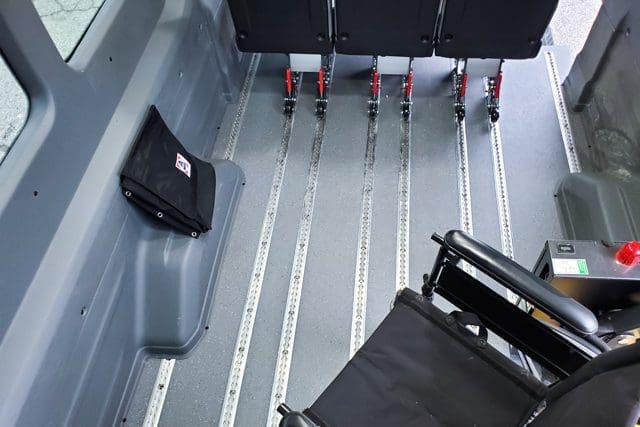
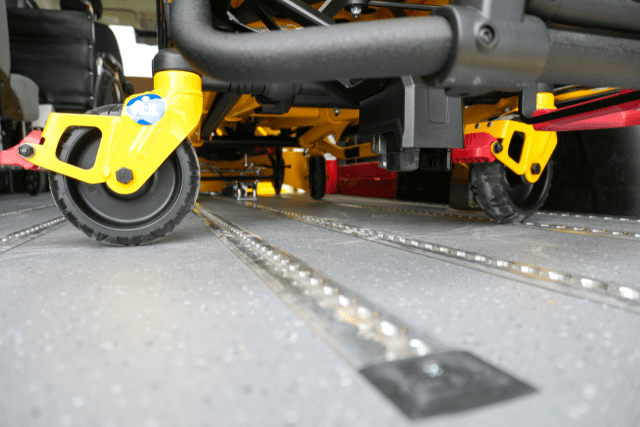
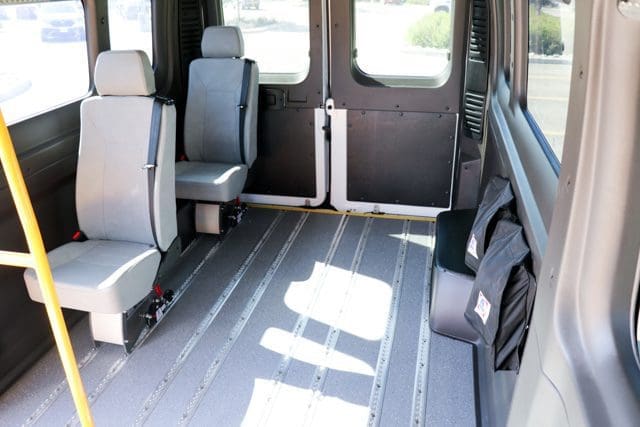
AutoFloor is an aluminum floor system covered with a durable transit-grade, non-slip floor surface. Tracks are located throughout the floor, providing a place to secure passenger seats, wheelchairs, and stretchers. This floor system makes for fast and simple changes to seating and wheelchair configurations to meet the needs of each ride. Overall, it allows a cargo van to be transformed into a fully functional paratransit vehicle.
What is AutoFloor made of?
AutoFloor is made of high-grade aluminum and covered with durable, industrial vinyl.
Is AutoFloor necessary? Can’t we just use the van’s factory floor?
Every person you support is unique, and their needs can change from day to day. That’s why we include AutoFloor in every full-size wheelchair van we build at MoveMobility. This floor track system is the secret to making sure everyone feels included and comfortable during their trip.
Think of it like a flexible puzzle. It lets you click seats into place or move them around to make room for wheelchairs wherever they’re needed. You get to decide how the inside of the van looks based on who’s riding with you that day. Changing your seating layout to fit what your clients need is much easier when you have this kind of flexibility.
We know a van that works for a big city paratransit team might not be right for a small First Nation community or a local adult day care. Every group has its own goals. AutoFloor is a favourite for many different teams because it respects those differences.
-
Adult day care programs use it to bring friends together for social outings.
-
Medical transportation teams use it to get patients to important checkups with dignity.
-
First Nation communities use it to connect elders with their families and healthcare.
Is AutoFloor safe?
Yes, AutoFloor is safe and certified for commercial and personal vehicle use. The specially designed floor system has been rigorously tested to meet all CMVSS Safety Standards. Installing seats and wheelchair restraint systems on the factory floor of a cargo van would not meet these standards.
What do you mean by flexible seating configurations?
Flexible seating configurations refer to the ability to change seating layouts and add or remove seats from the vehicle. Many accessible transportation providers need custom seating options because they transport clients with various mobility needs. There are over 1,000 possible seating and wheelchair layouts with AutoFloor.
Users quickly and easily change seating arrangements to meet the needs of each trip. For example, one trip may require transporting two wheelchairs and two ambulatory passengers, while the next trip may require space for one wheelchair and six ambulatory passengers.
Is AutoFloor expensive?
AutoFloor makes up part of the cost of an accessible van conversion. A wheelchair accessible van with AutoFloor is typically more expensive than a factory passenger van with a wheelchair lift installed.
Most accessible transportation providers acknowledge the value of AutoFloor because its flexibility brings a return on investment. The ability to customize seating layouts reduces the number of trips they must make, resulting in cost savings.
It’s important to understand that a factory passenger van with mobility equipment added is often a less costly alternative to a van converted specifically for mobility access, but it doesn’t offer flexible seating.
Does AutoFloor add extra weight to the vehicle?
AutoFloor does not change the vehicle’s GVWR (Gross Vehicle Weight Rating) or the capacity that vehicle operators can carry.
How do seats and wheelchair restraints fit into AutoFloor?
The built-in track system that makes up AutoFloor is custom-built to accommodate SmartSeats and multiple brands of wheelchair restraints. AMF Bruns and Q’Straint wheelchair restraints are compatible with and recommended for use with this floor system.
Seats are removed from the floor by simply using a lever to detach the seat from the floor track. Seats are on wheels and can be wheeled in and out of the vehicle. Wheelchair restraint systems are designed to be easily attached and detached from the floor.
What are the drawbacks of using AutoFloor?
When regular maintenance is not performed, dirt or debris may accumulate in the track system. This can be easily addressed through regular cleaning, such as sweeping, vacuuming, or using compressed air to clean the tracks.
What’s next?
At MoveMobility, we’ve spent years listening to the stories of organizations across Canada, from busy urban paratransit teams to remote First Nation communities. We don’t just see ourselves as manufacturers; we’re your partners in making sure no one in your community is left behind due to a lack of transportation. Our experience has shown us that when you remove barriers to movement, you’re actually opening doors to healthcare, family, and freedom.
We’re here to help you find the perfect balance of safety and flexibility because we truly believe that every person deserves a seat at the table—and a safe ride to get there. If you have any questions about how to make your fleet more inclusive, click the button below to talk to a mobility expert.
If you’re not ready to talk to a mobility expert just yet, we have a few other resources you should check out to learn more.
Recommended next reads
- Full size wheelchair van or minivan: Which is right for you? This article helps you decide if you need the extra space and AutoFloor flexibility of a full-size van or if a smaller minivan fits your program’s daily routes better.
- How much does a wheelchair van cost? This guide breaks down the total investment so you can plan your budget with confidence.
- How to choose a wheelchair van (11 steps): This is the perfect next step if you’re at the stage where you’re wondering how to decide on the right wheelchair van.



 English
  French